
Sarah and Lloyd
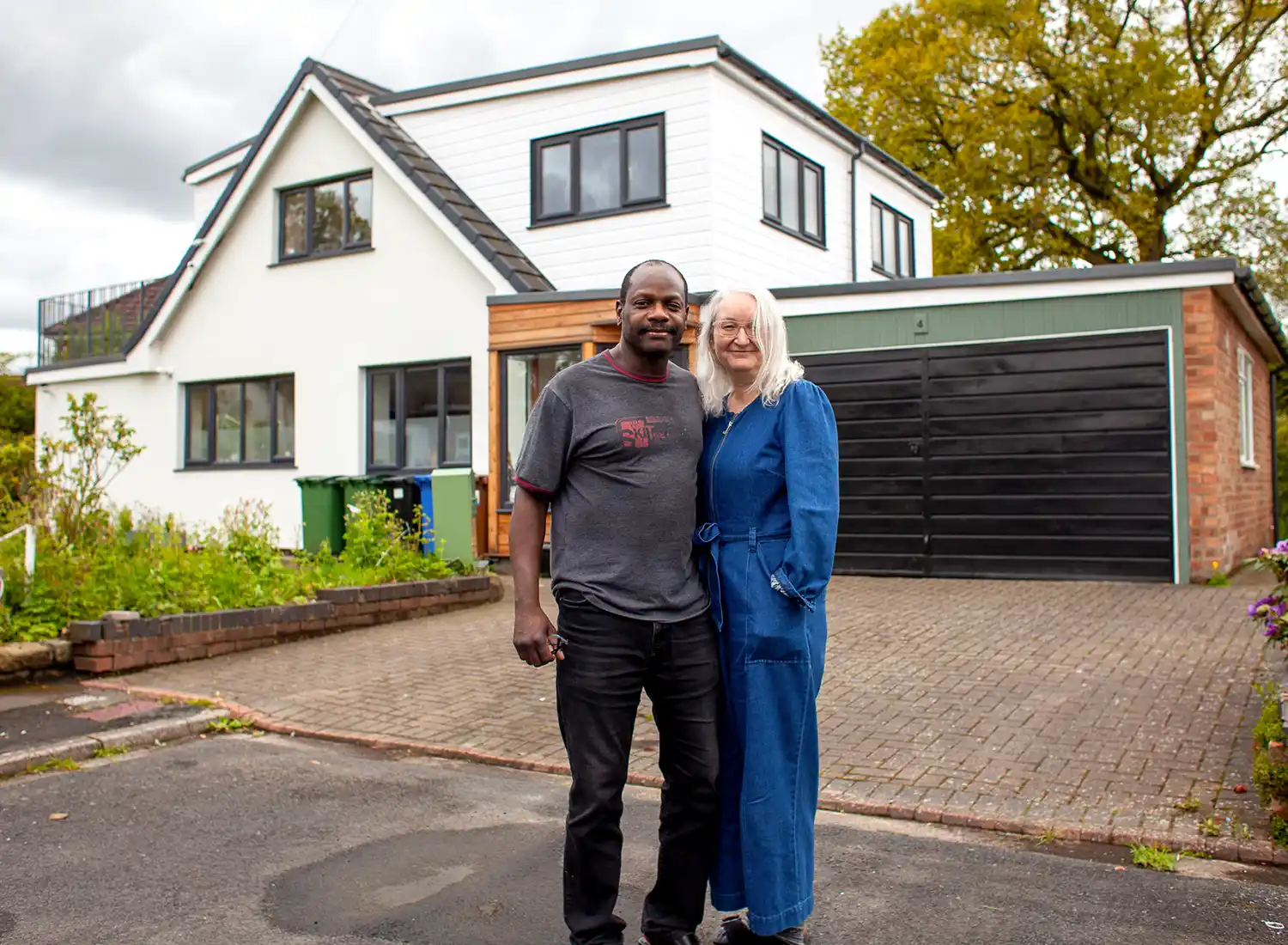




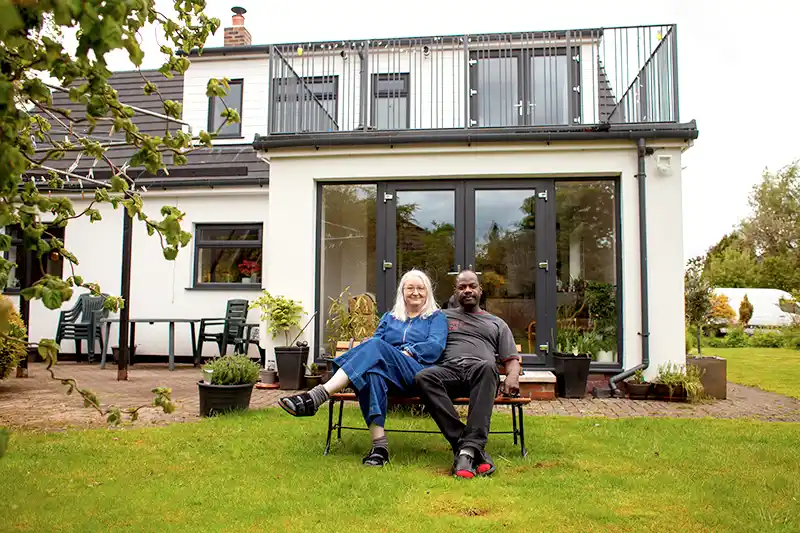
In 2016, civil servant Sarah Hamilton and her husband Lloyd, a cosmetic scientist, bought a run-down 1960s 3-bed bungalow in Heald Green, Stockport after looking for a ‘fixer- upper’.
The condition was far worse than expected and they ended up replacing the roof, insulating ceilings, floors and external walls and adding draught-proof windows and doors. The family used their savings to cover the works, which came to around £80,000.
Why did you retrofit your home?
One motivation was to make the house more energy efficient. Homes in the UK are responsible for around 20% of the country’s total greenhouse gas emissions – we wanted to do our bit around climate change.
But we also wanted to make it comfortable and habitable! When we first got the keys, the house was much worse than we’d expected. Branches were growing into the loft, there were wasp nests, the whole house was freezing with absolutely no insulation, floors were damp and rotting and the windows leaked. I knew if we moved in we might get sick.
"Our energy bills have reduced by 85%, we’re saving over £1,100 a year"
What eco-renovations did you make?
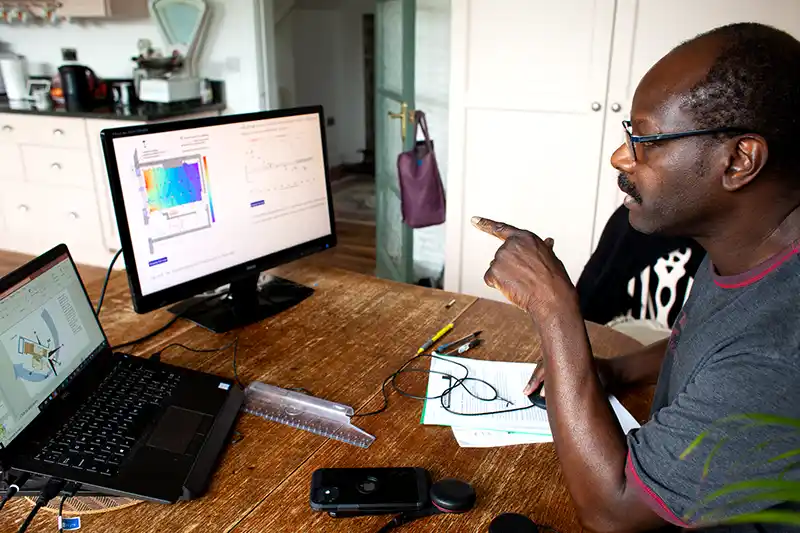
Our two children were teenagers when we bought the house, so we stayed with relatives. But we had great difficulty finding contractors to even quote, never mind make the house habitable or do the eco-improvements to the standard we wanted. In the end I bought a thermal imaging camera to help identify issues and check work quality as we did a lot of the internal improvements ourselves.
Richard Shears from the Retrofit Hub gave us great advice on how to design the external wall insulation works and we also got contractors in for the electrics and gas. Anthony Lane did our plastering and K&R Installations fitted draught- proof windows.
Contractors Edgeley Roofing did the main roof modification, but we replaced the rear roof ourselves, knocked out the draughty dining room fireplace and internal walls at the back of the house and rebuilt them so they were airtight.
We insulated the ceilings, floors and external walls and had to excavate an external kitchen wall to remove soil from the cavity as it was damp. We also fitted low energy lighting, water saving devices in the showers, heat recovery extractors in wet areas and smart heating technology.
After reading lots of information on energy efficient heating, we decided to use solar gain in the kitchen. It’s south-facing and because the space is so well-insulated the sunlight comes in through the kitchen window and warms up the space naturally.
Doing the works in stages meant we could get exactly what we wanted and managing it ourselves made it much more affordable. We used simple monitors to check temperature and humidity, and this helped us to measure improvements.
"I bought a thermal imaging camera to help identify issues and check work quality"


What benefits have you seen?
Since the retrofit, our energy bills have reduced by 85%, we’re saving over £1,100 a year. There are no draughts in the house, and it feels comfortable. The value of the house has also increased a lot. Similar-looking and sized properties in the area go for at least £500,000 today – we bought ours for £295,000. Ours has the added benefit of being eco-friendly too.
How did People Powered Retrofit help?
We became members of Carbon Co-op, and their People Powered Retrofit team were friendly and responsive. They provided lots of information and ‘spark’ so we could get going on the retrofit and do it properly. We learnt an awful lot through them, particularly around best price comparisons and getting more bang for your buck!
They recommended contractors, provided us with literature about retrofitting your home and signposted us to suppliers that provide eco-friendly building products like the Green Building Store, Back to Earth and Ecological Building Systems.
We also attended People Powered Retrofit events to speak to other householders and also contractors. Those conversations and my own research helped me determine what I needed to do. We also went to exhibitions like the Homebuilding & Renovating Show, Build it Manchester and Grand Designs Live to get inspiration.
Making your home more energy efficient isn’t as complicated or expensive as you might think. We want to encourage more people to give it a go.
"Making your home energy efficient isn’t as complicated or expensive as you might think"