
Lorenza, Paul and Lyra
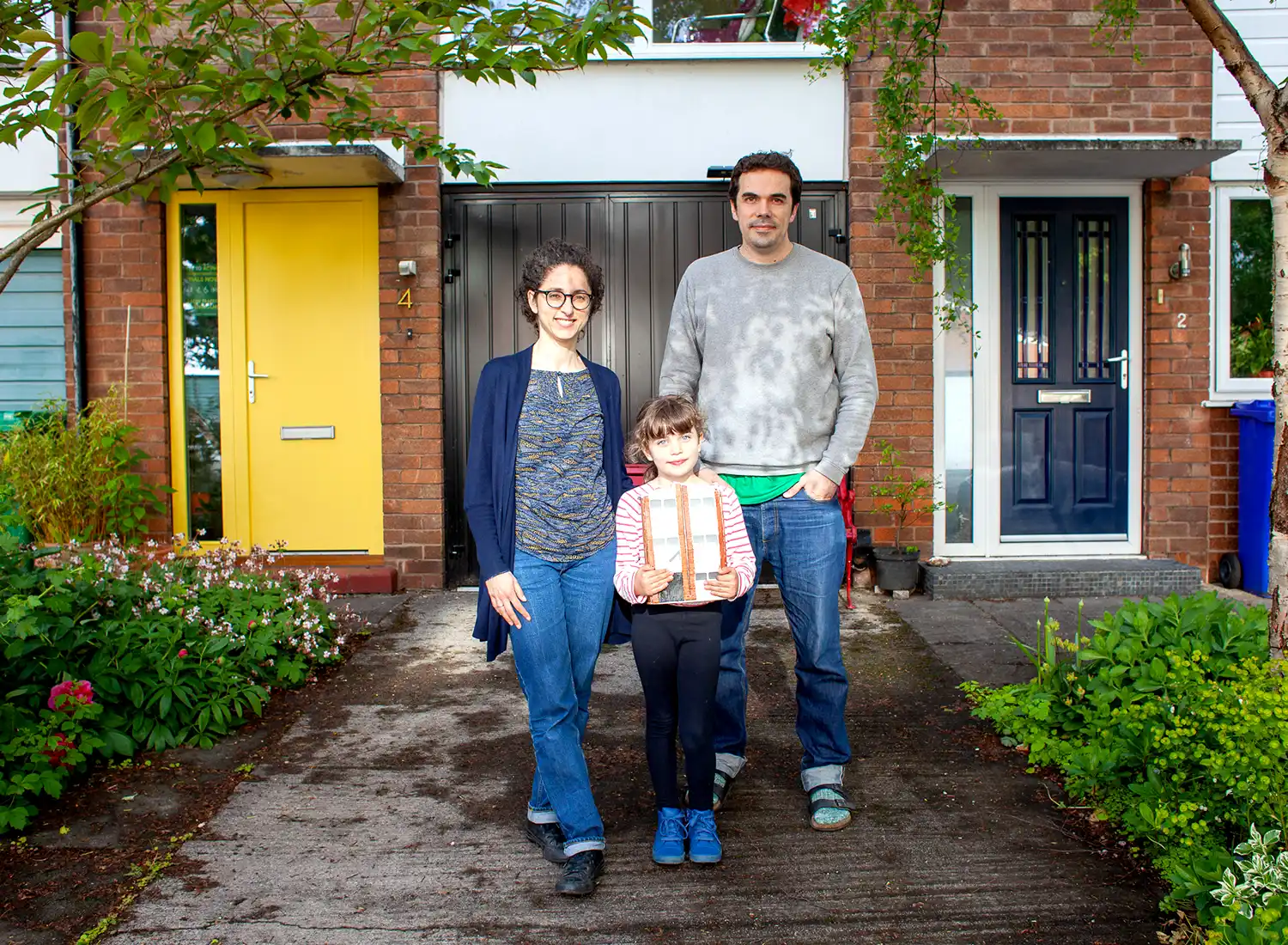




Lorenza Casini and Paul Bower, both architects, moved into their 1960s mid-terrace home in Burnage, South Manchester in 2009. They live there with daughter Lyra, 6 and Bitz the whippet.
The family have retrofitted their home in stages, installing a new boiler, insulating the roof, floors and wall cavities and fitting triple-glazed windows and doors. So far, they’ve spent approximately £25,000, using savings and a zero-interest loan from the council.
Why did you retrofit your home?
Back in 2007 my car broke down and I was in two minds about getting another, but we decided not to. Then a few years later I started an MSc at the Centre for Alternative Technology (CAT) in Wales. These experiences helped to kick-start our environmental awareness. As architects we believe that your home is part of how you live and that meant making our house, which hadn’t been touched for 20 years, energy efficient.
At first, we had to respond to immediate issues, these were replacing the original 1960s boiler and improving insulation to the roof and external walls. The top floor was cold and draughty, with old UPVC windows, so a few years later we replaced all the windows with timber triple-glazed frames. We did that initial work in phases with smaller chunks of money, fitting it around Lyra growing up.
Who did the work for you?
We did part of it ourselves. That way it helped keep costs down. Paul insulated the living room floor and garage ceiling; he just hired the equipment and bought the materials. It was relatively low risk. He also prepared surfaces and cleared rooms for contractors – not big things but they all helped to reduce costs and meant we kept one eye on the works.
When things were too technical for us to learn and we needed to have confidence they were done properly, we called the professionals in. The cavity wall insulation and external insulation was installed by a local contractor and the windows and doors were fitted by Green Building Store.
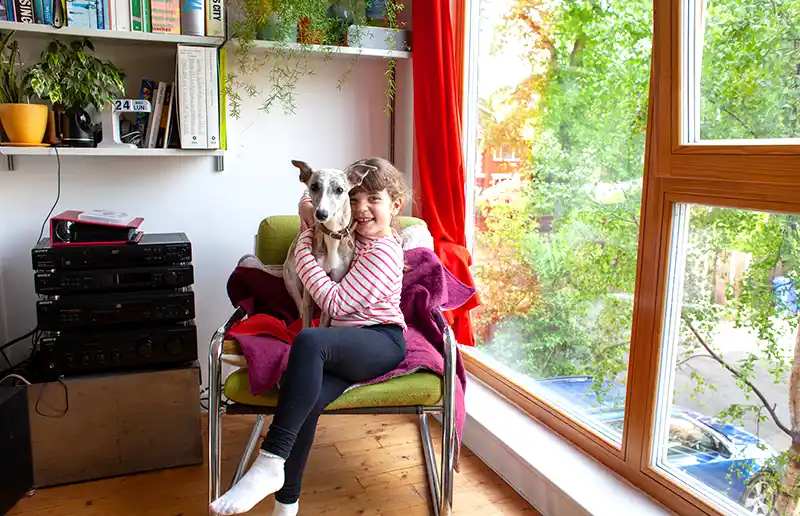
"We did that initial work in phases with smaller chunks of money"
What eco-renovations are next?
People Powered Retrofit have just done our home assessment and we’re looking at a more sizeable sum to future-proof our house. I panicked at first, but then realised this is our forever home. We love it as much as we did when we first visited, so there’s real value to investing.
To get to the next level of efficiency, the house will need some form of increased external and internal wall insulation along with better air-tightness. The home assessment also showed us different options for heating the house (and replacing our gas boiler) and this goes hand in hand with air quality and ventilation. We’re considering a few different technologies such as mechanical heat recovery systems and air source heat pumps.
Air tightness is important - it links to air quality and ventilation - but it will require a relatively high level of disruptive building work. Because we could do with a bit more space, we might push it and do some structural changes too.
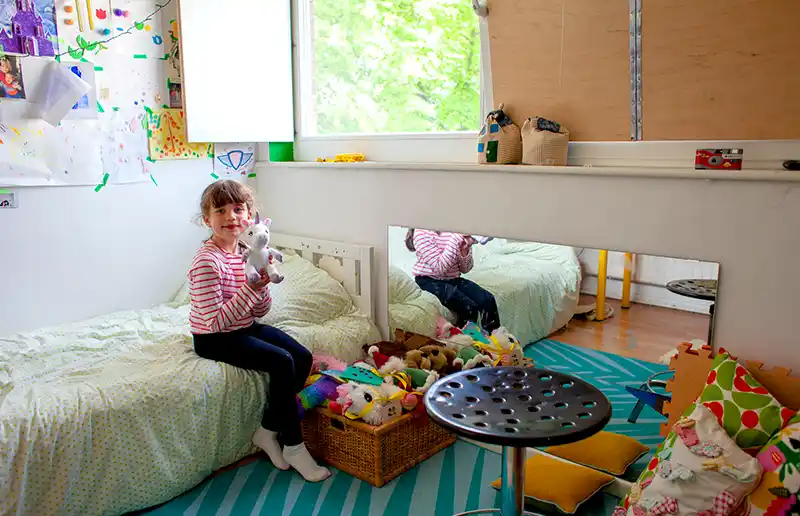
"It’s cosier and our heating bills are much lower but the thing we weren’t expecting was the acoustic improvement"


What benefits have you seen?
It’s cosier and our heating bills are much lower but the thing we weren’t expecting was the acoustic improvement. The windows helped to cut out the extra noise of cars and other things from the outside. From 2010 to 2016 our total annual energy usage (Kilowatt Hours) reduced from 9000 kWh to just over 6000 kWh; and has remained relatively steady since; which is roughly half the total annual energy usage of a typical 2-3 bed house in the UK.
Our daughter Lyra is also aware of the process. She knows we don’t want to use much energy and when they learnt about house and home in school, we made a little model of our house so she could understand it. Now she’s planning what her bedroom will look and feel like!
How did People Powered Retrofit help?
Their home retrofit planner assessment was really valuable. One of the things it does well is tease out those inner understandings you have of your home. It captures how you live in it now and how you can make it more energy efficient in the future. And it doesn’t become obsolete. If you can’t afford to do anything for two years, the advice is still valuable.
"The home assessment also showed us different options for heating the house"