Home Retrofit Planner: For Organisations





Join a community of practice built for organisations delivering retrofit
Retrofit delivery is uncertain - organisations doing this work are making complex decisions with real consequences, often without anyone else to check their thinking against.
That is the idea behind Home Retrofit Planner. It is a survey methodology and a reporting framework but equally a community of organisations navigating the same complex terrain and choosing to learn from one another rather than work in isolation.
By bringing HRP into your organisation you’re bringing in more than jus licensing a tool. You’re joining a network of peers facing similar decisions, sharing practical experience and helping each other make better informed choices for clients.
Why this matters
Tools in the retrofit space assume a certain level of stability and consistency that doesn't often exist in the British housing stock. They provide outputs based on fixed rules and expect interventions to slot neatly together. In practice though, a strong retrofit plan is developed through layers of judgement: understanding client’s needs and motivations well enough to match them to a specific route, knowledge of how certain measures may (or may not) perform based on the fabric, location or usage of the home, or how best sequence work around a client's budget and capacity for disruption.
That judgement is built up over time, through experience and by comparing notes with other people doing the same work. It’s the piece we think is often missing when software becomes the solution. HRP gives your team a consistent process to work within, but it is the community of SMEs, social enterprises and other non-profits that sit around it who help test, develop and refine the tool - making it more relevant to the messy reality of an actual retrofit project.
What being part of the community looks like
So, what does it mean when you’re part of our community?
- Access to other organisations delivering retrofit services who are facing similar decisions around funding, delivery models and client risk
- Shared learning from real projects, including the ones that didn't go entirely to plan
- A place to bring difficult decisions and receive perspectives from people who've dealt with something similar
- Ongoing input into how the HRP methodology develops, because it keeps evolving based on what members are actually running into on site
We've noticed the organisations that get the most out of this aren't just using what the community produces. Some of the most valuable members are the ones contributing what’s worked, flagging what's not and actively shaping the tools and guidance that everyone else relies on. If that sounds like your organisation, you'll probably get a lot out of this.
What you get
- Support to create a pre-survey questionnaire that captures the client's goals, budget and any existing problems before the visit
- An insight into the structured process for a home visit and full assessment
- A report format that includes:
- 3 scenarios at different budgets and disruption levels
- Phased recommendations for carrying out the work
- Likely performance improvements and approximate costs
- Any issues that need addressing before work starts
- A thermal modelling approach that goes further than EPC level assumptions
- A way of capturing the client's motivations, comfort, health and indoor air quality alongside the numbers, so the advice really reflects what matters to them
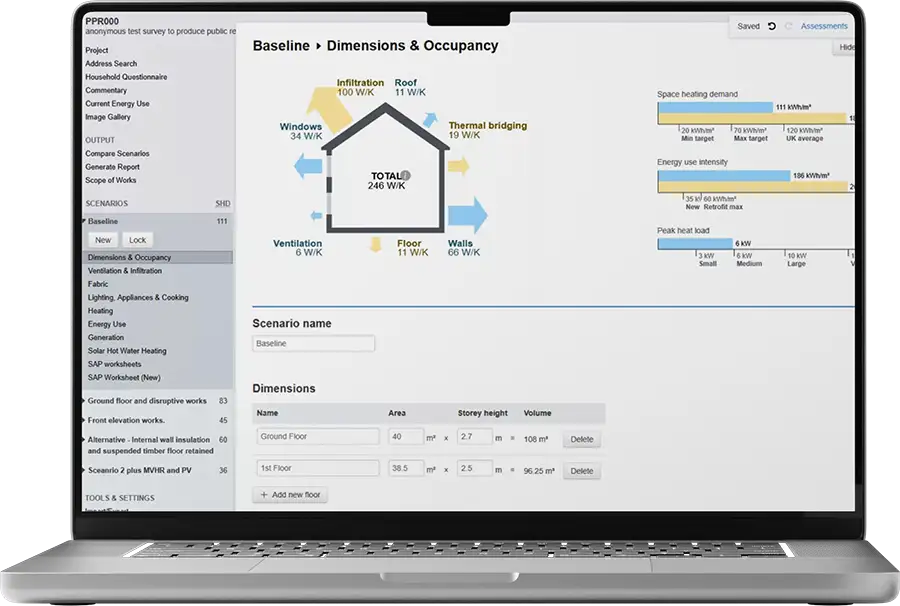
Where it fits into your service
HRP works well as the first stage in the retrofit journey, the diagnostic and planning work that happens before specification, contractor selection and installation. If you already offer retrofit coordination or a PAS 2035 aligned service, HRP slots in as that early assessment stage and helps you:
- Give clients a well evidenced basis for their decisions
- Keep a clear record of the reasoning behind your recommendations
- Set up a cleaner handover into specification and delivery
Get in touch
If your organisation is delivering retrofit services or moving into it, you don't have to work these decisions out on your own. HRP gives you a tested process to run with your clients, and the community behind it gives you somewhere to take the harder judgement calls that no report template can fully answer.