GB Energy Community Funds: exploring Community Retrofit feasibility
.png)




The new Great British Energy Community Fund is open and the good news for community and municipal approaches to retrofit is that energy efficiency advice services, bulk savings schemes and place based retrofit projects are all included within the scope of the funds.
In my role at People Powered Retrofit I’ve had a lot of experience of developing and delivering projects under the Community Fund. A lot of people have been in touch to ask about the GB Energy funds, so now seems like a good time to review the kinds of projects that can be funded under the scheme and the services that these projects might lead to.
[Our knowledge of the funding programme comes from direct involvement in previous applications and policy engagement, for up to date advice on how to apply, review the GB Energy guidance, attend one of their webinars and/or speak to your local net zero hub.]
Community energy and retrofit
GB Energy is the newly established government owned energy company with a strategic role in accelerating the energy transition in the UK. Its creation was a manifesto commitment and one of its key remits is the development of Community Energy and realising the strategic ambition set out in the Local Power Plan published in February 2026. ‘Community energy' refers to clean energy projects that local people and communities own, lead or actively participate in. The main focus of the plan is around the generation of clean, renewable energy, but retrofit and energy efficiency ambitions are noted and since the launch DESNZ officials and ministers have repeatedly expressed an ambition to link the Community Energy and retrofit agendas.
.png)
What the funds support
Available in England, Wales and Northern Ireland, funding supports feasibility studies of up to 12 months in duration that can inform the development of clean energy generation and/or energy saving activity. Open to a variety of community-based organisations, Type A projects (clean generation) are divided into Stage 1 (up to £40,000) and Stage 2 (up to £100,000) whilst Type B (energy efficiency) are limited just to Stage 1. Funding must be used to demonstrate ‘feasibility’ for example a proof of concept design, technical modelling, financial profiling etc, rather than funding the continuation of existing projects or services. It’s likely that overall the majority of funding will go to Type A projects and there is a separate funding stream for local authorities, a partnerships fund, with projects limited to clean energy generation, but plenty of funds are available for Type B projects.
What’s in a Type B project?
The Type B projects are directly relevant to community retrofit organisations and fall into three areas.
- Energy advice - our experience of what constitutes energy advice funded under the scheme is fairly broad. It can relate to advice targeted towards people on low incomes and in fuel poverty but some schemes have been more relevant to the ‘able to pay’ audience and the Letchworth project (see below) aimed to establish a One Stop Shop service for local people.
- Bulk purchase schemes - again, a fairly loose definition, bulk purchase schemes can be relatively ‘bottom up’ with groups purchasing equipment to support mutual aid projects, or bulk purchase can be used to support more ‘top down’ or centrally coordinated place-based retrofit schemes.
- Energy efficiency programmes for multiple households - the terminology is slightly ambiguous here, and there are provisos (see below) but our understanding is that this covers projects such as place based retrofit programmes, community led housing schemes and collective heating approaches (see the Alt Co-operative case study below).
The guidance flags that ‘large scale retrofit delivery’ should be addressed under Warm Homes Plan funding (such as it is!) and that applicants “must identify the need or service gap that the proposed model is intended to address” implying that it’s important for applicants to set out the uniqueness of the approach being explored - and why other providers aren’t addressing the particular need or opportunity in question.
To explore these models further, here are some short case studies outlining our previous work on three relevant projects.
The Alt Housing Co-operative
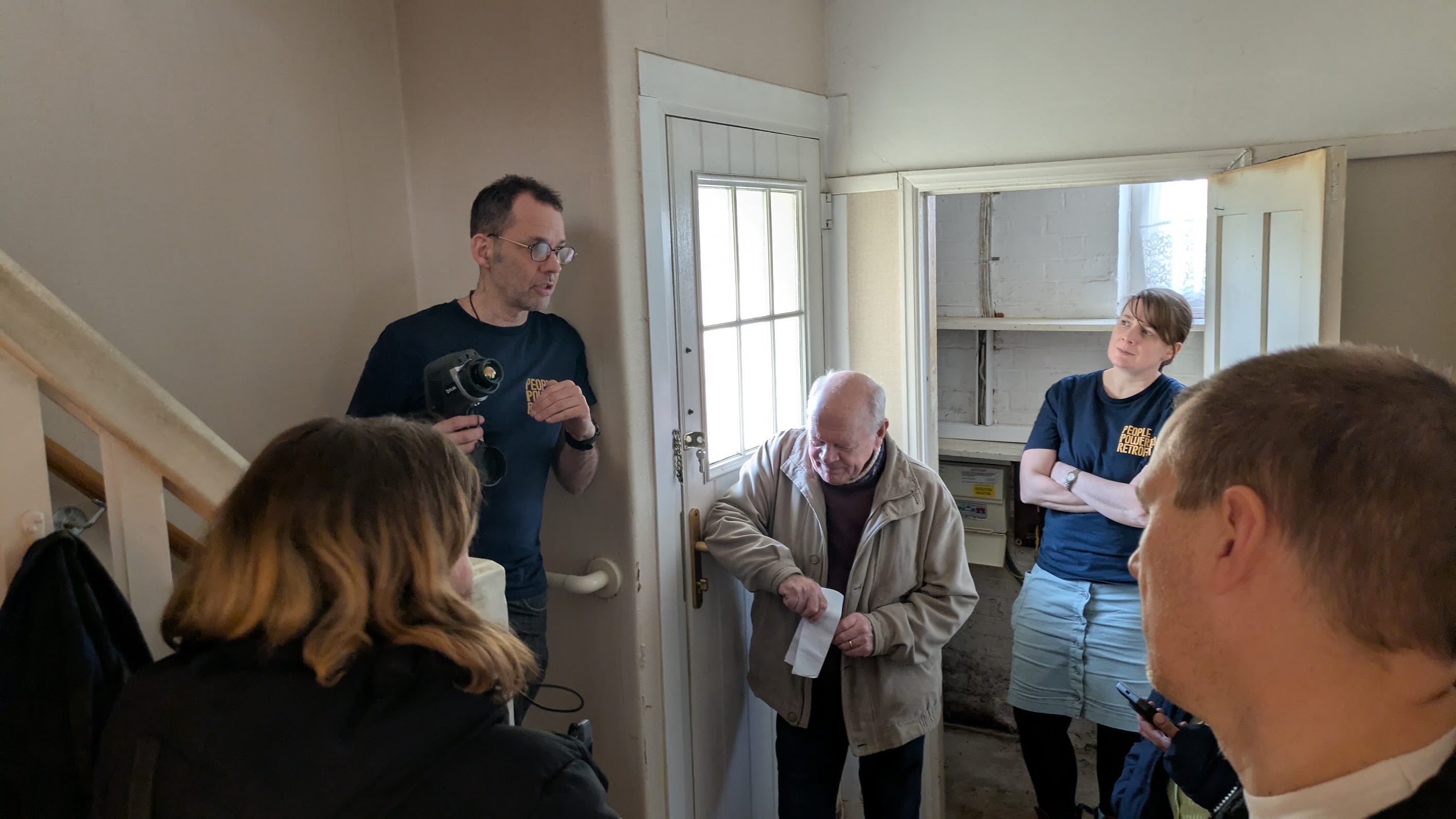
The Alt is a housing co-operative based in Liverpool which owns and manages nearly 150 densely packed, terraced homes in the L8 area of Liverpool. The co-op were interested in understanding whether a low temperature, ambient heat loop network similar to the model advocated by Net Zero Terrace would be feasible to build and meet the needs of their tenants. The project involved People Powered Retrofit staff visiting and surveying homes in order to develop a baseline energy model and model different fabric intervention scenarios using our Home Retrofit Planner tool. We also developed materials to engage tenants and the co-operatives board - to enable them to understand the implications of the work and be better able to make key decisions. The products of the technical modelling then informed a wider study carried out by Locogen that examined the feasibility of the ambient heat loop approach. Though the network proved not to be financially feasible, People Powered Retrofit’s work is now informing the development of plans for street based retrofit.
Letchworth Garden City
Letchworth is a historic town with a built environment heritage of international significance. The foundation that still owns the freehold of the town and safeguards its founding vision accessed feasibility funding to assess opportunities for making homes in Letchworth more energy efficient and to communicate this information clearly to residents.
People Powered Retrofit carried out a wide variety of activities, engaging local residents around retrofit, assessing a number of archetypal properties and providing technical advice on retrofit to the foundation and residents. We used our assessment activity as an engagement opportunity, running a series of ‘Home Energy Parties’ to educate and inform local people about the challenges and opportunities of retrofit.
The results of the work can be found here and the foundation hopes to establish a more holistic ‘One Stop Shop’ for residents that can assist residents:
Calderdale Retrofit Guide
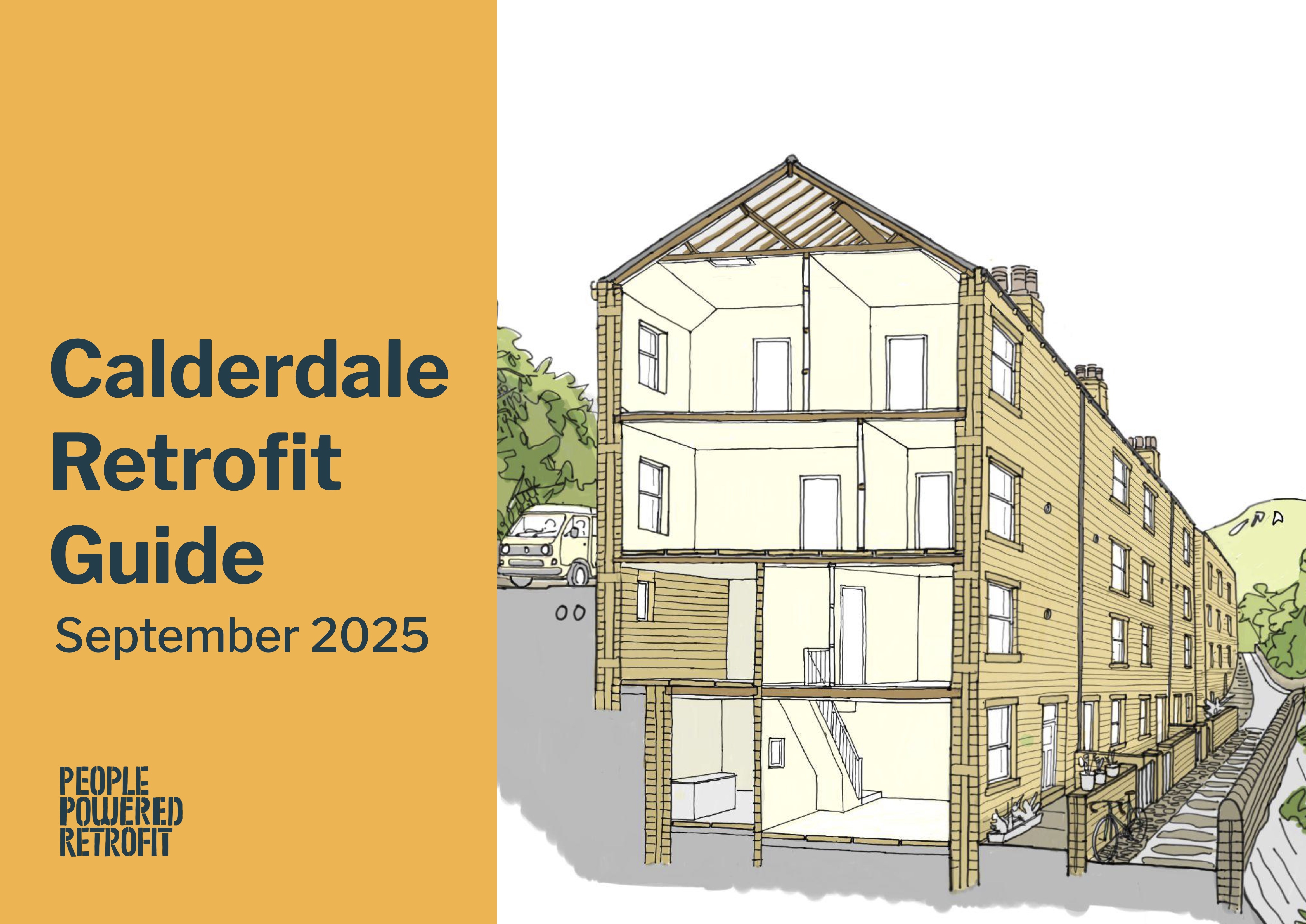
The Calderdale Retrofit Guide was delivered using InnovateUK funding and involved identifying local archetypes, assessing properties and modelling retrofit pathways using Home Retrofit Planner and creating a retrofit guide for the archetypes identified.
Commissioned by Calderdale Council, Todmorden Learning College and Carbon Co-op, the creation of the guide was a recommendation of the innovative Calderdale Retrofit Citizens Jury and provided outline retrofit strategies for each house that highlight some of the issues that need to be considered and the improvements that might be possible.
The guide is now informing a broad range of activities in the area and there is an ambition to use the insight generated to inform a place-based retrofit scheme in Todmorden.
Next steps
With the latest round of the fund closing on 12th November, People Powered Retrofit are interested in collaborating with others on projects or supplying quotes for commissioned work, contact Partnerships Manager Monika Jesznska to discuss further.
A comprehensive list of projects funded under the Greater British Energy Community Fund: